|
Start blogging by creating a new post. You can edit or delete me by clicking under the comments. You can also customize your sidebar by dragging in elements from the top bar.
0 Comments
|
Early French Cinema
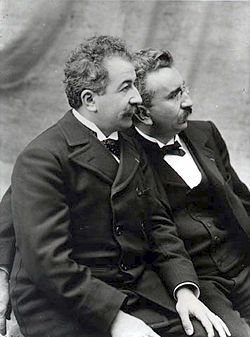
The Lumière brothers, Auguste Marie Louis Nicolas (19 October 1862, Besançon, France – 10 April 1954, Lyon) and Louis Jean (5 October 1864, Besançon, France – 6 June 1948, Bandol[1] [2]), were among the earliest filmmakers. (Appropriately, "lumière" translates as "light" in English 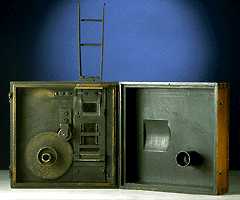 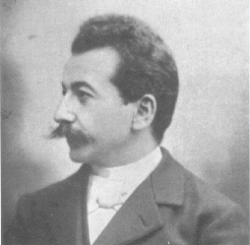
Above...Auguste Lumiere... The Lumiere Brothers' - First films (1895)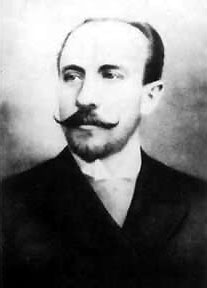
Georges Méliès (December 8, 1861 – January 21, 1938), full name Marie-Georges-Jean Méliès, was a French filmmaker famous for leading many technical and narrative developments in the earliest cinema. He was born in Paris, where his family manufactured shoes. The Eclipse
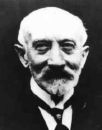
Before making films, he was a stage magician at the Theatre Robert-Houdin. In 1895, he became interested in film after seeing a demonstration of the Lumière brothers' camera. In 1897, he established a studio on a rooftop property in Montreuil. Actors performed in front of a painted set as inspired by the conventions of magic and musical theater. He directed 531 films between 1896 and 1914, ranging in length from one to forty minutes. In subject matter, these films are often similar to the magic theater shows that Méliès had been doing, containing "tricks" and impossible events, such as objects disappearing or changing size. Voyage a travers l'impossible
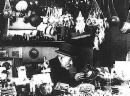
His most famous film is A Trip to the Moon (Le voyage dans la Lune) made in 1902, which includes the celebrated scene in which a spaceship hits the eye of the man in the moon. Also famous is The Impossible Voyage (Le voyage à travers l'impossible) from 1904. Both of these films are about strange voyages, somewhat in the style of Jules Verne. These are considered to be some of the most important early science fiction films, although their approach is closer to fantasy. Le Voyage dans la Lune 1902

Alice Guy Blache was the first Major European filmmaker.At first,as Gaumont's secretary she was given tactit and tepid permission to experiment with film(Gaumont was skeptical of the new medium)...She began below with just filiming herself and then by the early 1900s she was going on a 15 year streak that saw her establish Gaumont as the leading international voice in the new Cinema. Les baigneurs
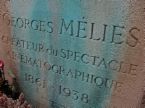
Above...the resting place of Georges Melies,one of film's foremost visionary artistic talents La vie du Christ

Méliès did not grasp the value of his films, and with some 500 films recorded on cellulose, the French Army seized most of this stock to be melted down into boot heels during World War I. Many of the other films were sold to be recycled into new film. As a result many of these films do not exist today. In time, Méliès was rediscovered and honored for his work, eventually taking up stage performance. George Melies - The Hilarious Posters (1907)
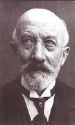
Georges Meliés- Le Locataire Diabolique
Melies was so blase about his work that he allowed the French Army to seize most of it and melt it down for Army Boot heels! Melies - Le Cake-Walk Infernal -Music: "Satan's Cakewalk"
ArchivesCategories |
Menu:
- Home
- ANNOUNCEMENTS
- A BRIEF SCENARIO
- Beethoven Duel
- ОСЕННИЙ-AUTUMNAL
- A Peter To Remember
- Renoir Comments
- MONDSCHEINSFALL
- Les Trois Mousquetaires
- DUELLO NOTTURNO
- 美しい蝶
- 美しい蝶 Comments
- LA VENEZIA DI VIVALDI
- RENOIR
- Versailles
- BERTRAND RUSSELL
- Duello da Camera
- VIVID FROM VITRIOL
- The Best Violin Maker?
- BRAHMS KAMPF
- Бустер Keaton
- ETUDES AS HIGH ART?
- A Haunted Spectre
- TRAUDL JUNGE
- Мотылёк-Papillon
- MEINDERT HOBBEMA
- Hobbema Comments
- A Cello Duel
- Rainha do Puritano
- 瓷器是-PORCELAIN-陶磁器
- Emperor Joseph's Duel
- LIASONS
- Made in America
- PELERINAGE
- SANS SOUCI
- Vlad Ţepeş-Drăculea
- A KIND OF BLUE
- Viaţa unui Compozitor
- HOUSE OF USHER
- De Enige Echte Charlie
- THE SPHINX OF DELFT
- Vermeer Comments
- Ayn Розенбаум Rand
- Ayn Rand Comments
- UNVOLLENDETE...
- Leni
- Leni Comments
- ORGANMAKER'S DUEL
- Eugenie Grandet
- GÖTTLICHE FUNKE
- Etiudy jak Muzyka?
- NIÑO RICARDO
- Anunnaki & Sitchin
- BRANDENBURG DUEL
- Toulouse Lautrec
- Lautrec Comments
- SCHUMANN DUEL
- Hitler's-Sohn Gefunden
- A PAINTER REBORN
- Bach Toccata Duel
- VIEUX ciné
- 評論-意見-民意
- FRITZ KREISLER
- Wilhelm Steinitz
- ANTHONY FOKKER
- Nicolo's Duel
- VIGEE le BRUN
- Impromptu Krieg
- PRIMO LEVI
- Wachet Auf
- MEL BROOKS
- A Scandal In Bohemia
- JUPITER RĂZBOI
- Willem Van Aelst
- Van Aelst Comments
- CAPABLANCA!
- Lillian Gish
- Личные Мысли
- JAN BOTH
- Jan Both Comments
- Bullwinkle
- MICHAEL SCHÄFFER
- Пабло Casals
- SAINT GERMAIN
- Francesco Tamagno
- POUSSIN
- Fisher-Спасский
- РОЗА PONSELLE
- Signac and Satie
- Signac & Satie Views
- MUSSOLINI'S SINGER
- Myer Lansky
- СИРЕНЬ & TULIPS
- Painterly Thoughts
- ПСАЛОМ
- Keyboard Thoughts
- GOULD в РОССЙИ
- Arp Schnitger
- LUIGI CHERUBINI
- Cherubini Comments
- Сказки-Leyendas
- NAPOLEONIC ЕПОХА
- L'epoque de Napoleon
- WALD-BOSQUE-ЛЕС
- Buster Китон
- CASALS vs.FOURNIER
- American Art
- ESMERALDA de LARA
- Исаа́к Левита́н
- CLARA WIECK
- Soggiorno Sinistro
- MATTIA BATTISTINI
- Battistini Comments
- Ogólne Komentarze
- New England Ghosts
- Bb СОНАТА KRACH
- la Gloire d'Octobre
- DER HEILIGSTE BACH
- C.P.E.Bach Comments
- Flauta Doce's Encantos
- 18ten JAHRHUNDERT
- Cortot & Chopin
- Cortot Comments
- JANE AUSTEN 1
- Jane Austen Comments
- Capricieuze Klarinet
- Capricieuze Comments
- JAN PADEREWSKI
- Paderewski Comments
- MICHAEL WITTMAN
- Wittman Comments
- Cладостно-Горький
- MICHEL DE LA BARRE
- De La Barre Comments
- Berlioz
- Berlioz Comments
- VIKING
- Viking Comments
- ....שטעטל
- Shtetl Comments
- IGNAZ PLEYEL
- Ignaz Pleyel Comments
- FRANCOIS DIEUPART
- Dieupart Comments
- MILES
- Miles Comments
- SCHLESIEN SILBER
- Schlesien Comments
- ИСТОРИЧЕСКИЙ Musikinstrumenten
 RSS Feed
